You have had that spot pressed, rolled, and stretched, and within a day it is right back to tight. Cupping works the other direction: suction lifts the tissue instead of pushing into it, so the layers underneath can glide again.

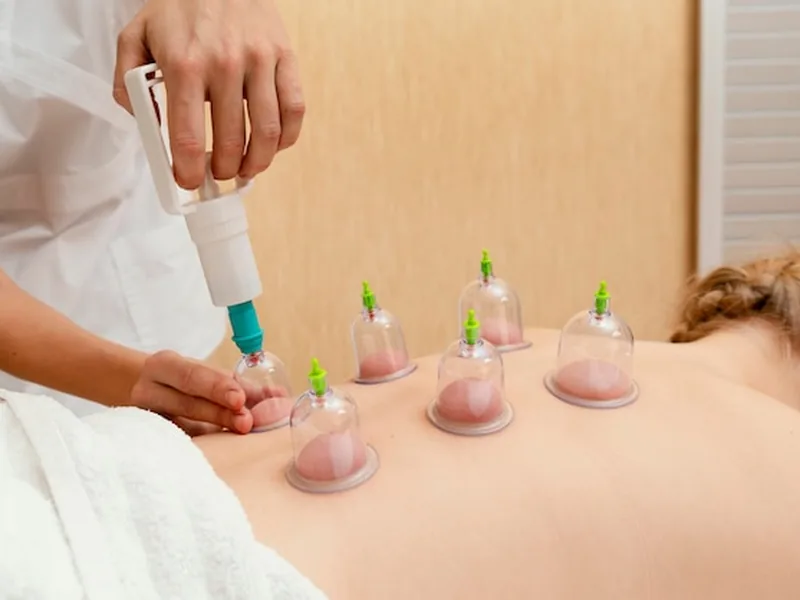
Fascia is the sleeve that wraps every muscle and lets one layer slide across the next. When it thickens or binds down after an injury, after surgery, or after years in the same posture, the muscle underneath is not so much tight as stuck, which is why pressing harder often changes nothing. Cupping applies the opposite force. A cup creates suction that lifts skin and fascia away from what sits beneath, opening space in the layers rather than compressing them. Blood returns to an area that had gone quiet, and glide starts to come back. Your therapist may hold cups still over one stubborn spot or slide them along the length of a muscle, and will usually follow with movement so the tissue relearns the range while it is open. At Maritime, cupping is never the whole treatment. It is used inside a session, alongside hands-on work and loaded exercise, because decompressed tissue only keeps its new range if something teaches it to. Sessions run 30 to 60 minutes, one on one with your therapist.
The direction of force is the entire point. Massage, foam rolling, and instrument work all push in. Cupping pulls out. When an area has plateaued under pressure-based techniques, changing direction is often what finally moves it. Every clinician at our Manomet clinic holds a Doctor of Physical Therapy degree, so the decision to use cupping on a given day comes out of an evaluation rather than off a menu.
Cupping is for tissue that has bound down, not for general soreness. If an area has been worked on again and again and keeps returning to the same restricted state, decompression is worth trying.
The incision closed months ago, but the area around it moves as one stiff block and the joint beside it has quietly stopped going all the way. Gentle suction over and around the region restores slide between the layers. The area moves as separate layers again, so the joint is no longer limited by skin and fascia.
By three o'clock the space between your shoulder blades feels welded shut, and stretching at your desk does not touch it. Decompressing the fascia there gives the rib cage and shoulder blade room to move. Reaching overhead gets easier in the same visit, and the exercise that follows finally has range to work in.
Calves, hamstrings, or the outside of the hip go back to tight almost as soon as you leave. Suction paired with movement gets the muscle working through its full length instead of a shortened piece of it. The looseness lasts past the drive home, because the strength work that follows locks the new range in.
Cupping is one part of a physical therapy appointment here, not a standalone booking. This is how it fits into a visit.
Your first visit is a full hands-on evaluation. Your therapist works out where glide is actually missing, checks the skin over that area, and asks about your medications and medical history before deciding whether cupping is the right tool for you at all. Massachusetts has direct access to physical therapy, so you can book that evaluation without a physician referral. Some plans still require one for coverage, so we verify your benefits first and tell you exactly where you stand.
Sessions run 30 to 60 minutes, one on one with your doctor of physical therapy, and the cupping itself is usually a short piece of that. Lotion goes down, cups go on, and you feel a firm pulling that should be strong but never sharp. Your therapist either holds the cups over one area or glides them along the muscle, then has you move the joint while the tissue is decompressed.
We recheck the range right away and then use it, because the exercise that follows is what turns a temporary change into a lasting one. Most patients notice improvement within about six visits, and typical care runs 2 to 3 visits a week for 4 to 6 weeks. We accept nine major insurance carriers along with Workers' Compensation and auto injury claims, check your benefits before your first visit, and give you your copay in writing. Flat self-pay rates are available if you are not covered.
Cupping leaves round marks where the cups sat. They are usually painless, but they are visible, and they normally take several days to about two weeks to clear, so plan around anything where that matters to you. Tell your therapist before treatment if you take blood thinners, bruise easily, have a bleeding or clotting disorder, have a history of blood clots, are pregnant, have diabetes or any condition that slows skin healing, or take a medication that thins the skin. We do not cup over broken skin, open wounds, a rash or active infection, a recent fracture, varicose veins, or any area with a known or suspected deep vein thrombosis. If the suction turns sharp or burning at any point, say so and the cup comes off.
Very nice atmosphere, Michael is very knowledgeable and I am confident that I will benefit greatly at Maritime PT.

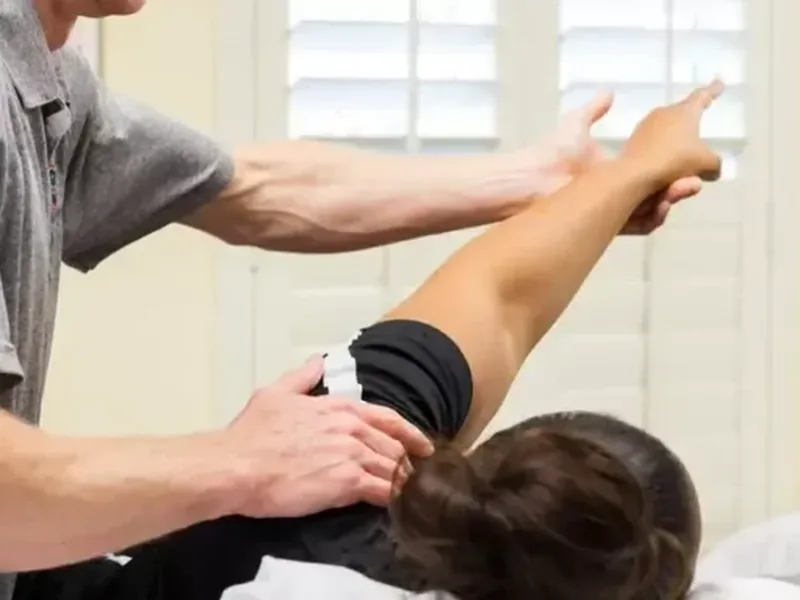
The hands-on version of the same goal, working into the tissue rather than lifting it away.

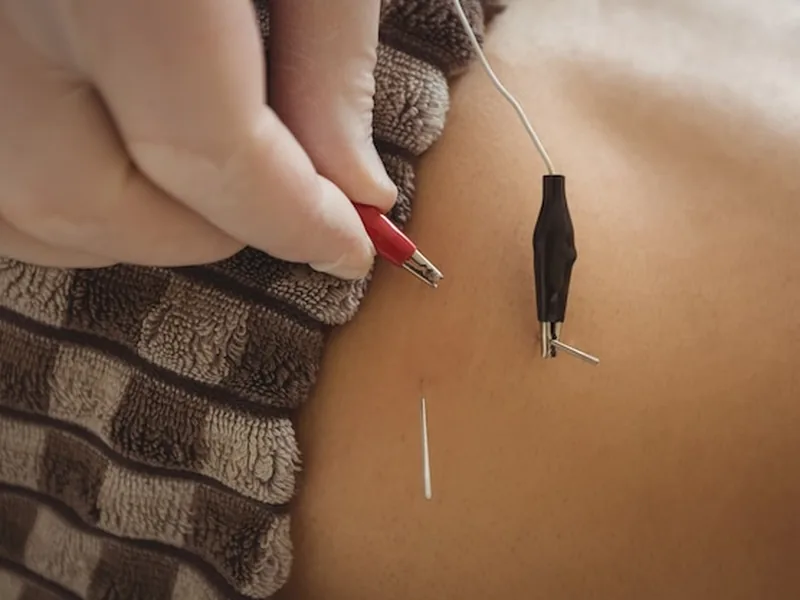
For a trigger point rather than bound fascia. Dr. Brown is certified in functional dry needling.

The area people most often ask about cupping for. Here is how we assess and treat it.