What causes hip and knee pain?
Hip and knee pain rarely comes from a single problem. The knee is caught between the hip and the foot, and when either one is weak, stiff, or off-balance, the knee pays the price. Understanding which piece of the puzzle is broken is the key to fixing it. Without that clarity, you end up treating the pain while the real problem stays active.
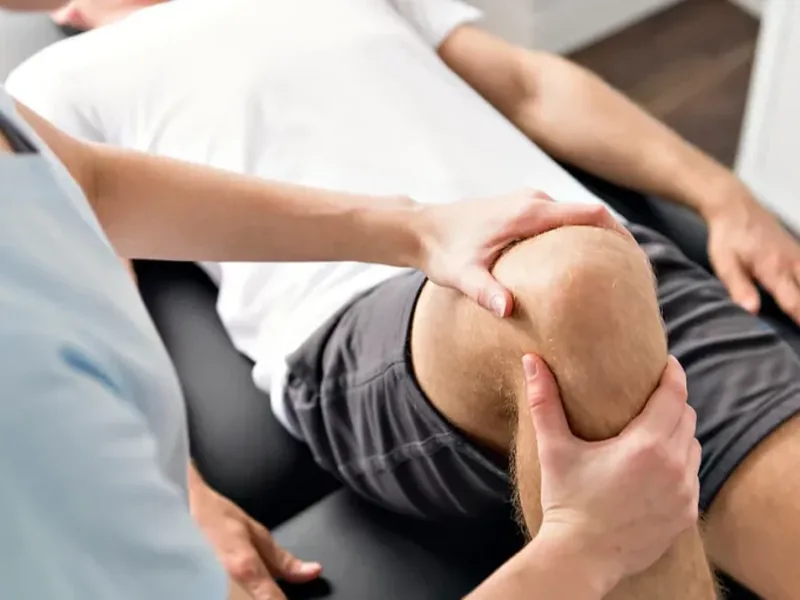
The kneecap tracks poorly when the hip is weak or the foot collapses inward. The cartilage under the kneecap gets irritated with every step or pedal stroke. It is not the knee that is weak. It is usually the hip muscles that are not doing their job, forcing the knee to compensate. Fix the hip, and the knee usually settles.
The hip has small bursae, or fluid-filled sacs, that reduce friction. When the hip muscles are imbalanced or tight, they irritate these bursae and the surrounding structures. Pain on the outside of the hip or deep in the joint often comes from overload and muscle imbalance, not from structural damage that requires surgery. It usually bites hardest when you lie on that side at night or climb a flight of stairs, and it settles once the glutes learn to control the hip again instead of letting it drift.
The IT band is a thick strip of connective tissue that runs down the outside of your leg. When your hip muscles are weak, the IT band becomes overworked and inflamed. Pain on the outside of the knee during running or activity is the result. Strengthening the hip stops the IT band from being pulled too tight.
Wear and tear happens, especially as we age. But arthritis itself is not a death sentence for your knees or hips. Strong muscles around a joint protect it and keep it moving smoothly. Rebuilding strength and restoring movement often brings pain relief even when imaging shows arthritis. Plenty of people with wear on a scan have no pain at all, and plenty of people with clean scans hurt every day, which is why we treat how the joint behaves rather than how it photographs.
The hip muscles control how your leg moves with every step. When the glutes and hip stabilizers are weak or underactive, the knee has to twist and bend in ways it was not meant to. This distortion is cumulative and leads to both knee and hip pain. Activating and strengthening the hip stops the problem at its source.
The meniscus acts as a shock absorber in the knee. Wear from repetitive activity, especially with poor mechanics, gradually breaks down this cartilage. While severe damage may need surgery, moderate wear often responds well to reduced load, proper strengthening, and movement patterns that protect the joint. Locking, catching, or a knee that swells the day after activity are the signs worth checking, and a hands-on evaluation tells you which category you are actually in.