What causes neck pain?
Necks rarely give out in a single moment. The pain is usually the sum of hours: hours at a screen, hours on a phone, hours on a pillow that stopped working years ago. Sometimes there is a real event behind it, like a collision or a fall. Either way, the first job is finding which structure is actually irritated.
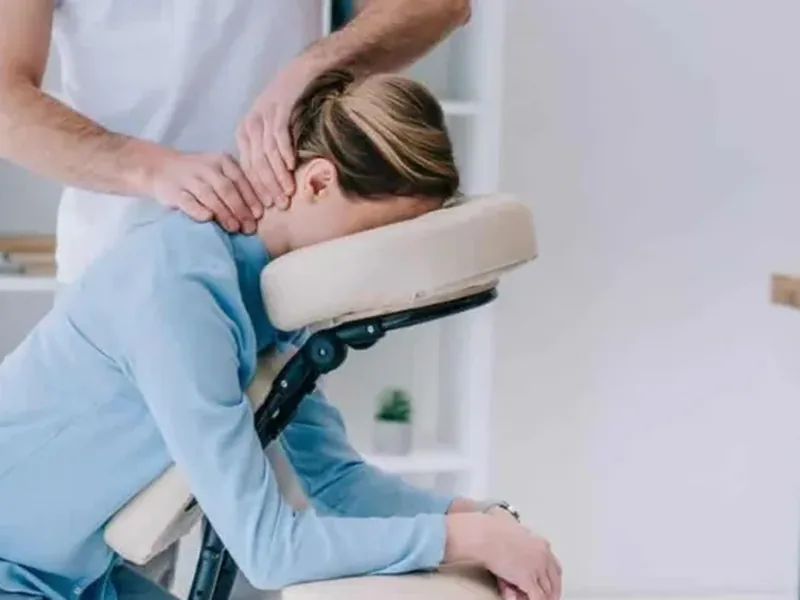
The muscles and ligaments that hold your head up are small, and they work all day. Hold one position too long, sleep at a bad angle, or turn hard to check a blind spot, and those tissues get overloaded. You feel it as a tight band across the shoulders, a neck that will not turn one way, and an ache that gets louder by evening. Strains hurt, but they respond quickly to hands-on care and early movement.
The discs between your neck vertebrae can bulge or lose height, and when one irritates a nearby nerve root the symptoms stop staying in the neck. People describe burning under the shoulder blade, an ache down the arm, pins and needles in the hand, or a grip that feels weaker than it should. Looking up, or living with the head pushed forward, usually makes it worse. Most cervical discs settle with the right loading and movement rather than surgery.
Stenosis means the space around the spinal cord or nerve roots has narrowed, usually from arthritic change and disc height loss over the years. It builds slowly: a stiff neck, heaviness or clumsiness in the hands, pain that flares when you hold your head back. Narrowing shows up on scans of plenty of people who feel fine, so the imaging is only part of the story. Mobility, strength and posture endurance change how much room those nerves actually get.
A rear end collision, a fall on the ice, a hard hit in a game: the head travels through a range the neck never chose, and the tissues take the strain. Symptoms often show up a day or two later as stiffness, headache, dizziness, and a neck that guards against every movement. Complete rest tends to drag it out. Graded movement and hands-on work early give the neck a reason to stop bracing.
Your neck does not mind a position. It minds a position you never leave. A monitor set too low, a laptop on the kitchen counter, a phone held down at your waist: each one asks the small muscles at the base of the skull to hold for hours without a break. Sleep is the other half, because a pillow that is too tall or too flat leaves the neck side bent all night. That is why so many people wake up already sore.
Plenty of headaches are not really headaches. When the joints and muscles of the upper neck get irritated, they refer pain up over the ear, behind the eye, and across the forehead. The tell is that the head pain follows the neck: it builds through a long work day, quiets over a weekend, and returns with the same stiffness. Treating the neck itself is often what finally changes that pattern.