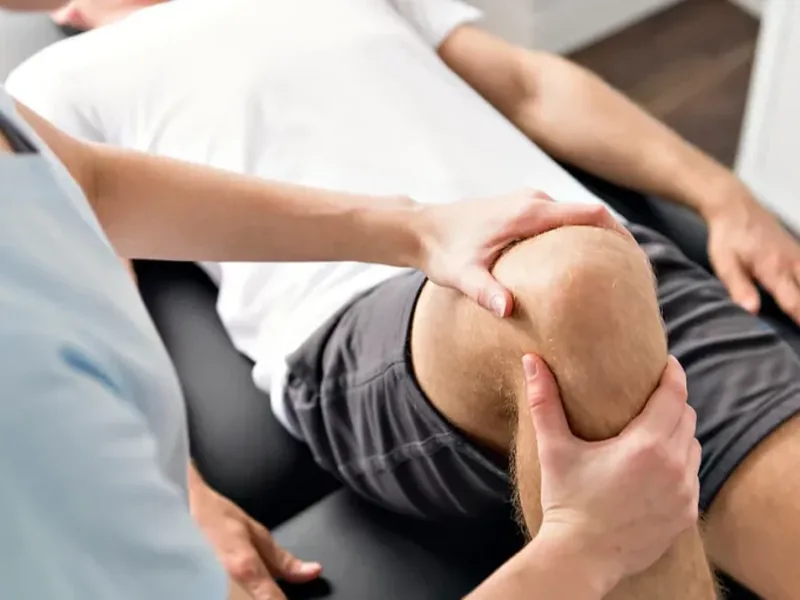
You are sidelined from the sport or activity you love. If getting back to competing or training feels impossible, one evaluation puts you on a clear path to return stronger than before.
Sports injuries come in many forms, but most fall into a few categories: traumatic events that happen in the moment, overuse injuries that build up over time, and movement errors that put bodies in vulnerable positions. Understanding your injury type and what led to it is critical to recovering fully and preventing re-injury. Without that understanding, you often end up back on the sidelines.
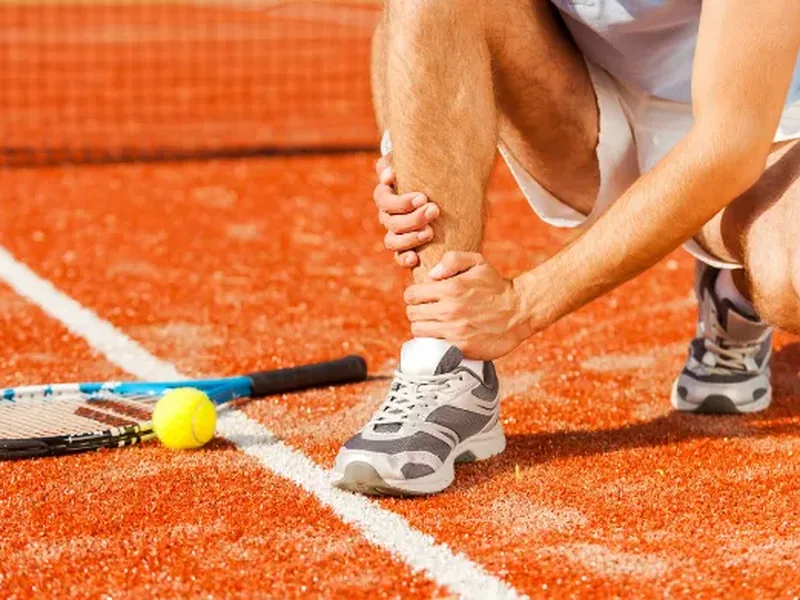
A sprain is a stretched or torn ligament. A strain is a stretched or torn muscle. Both happen from a sudden force or twist during play. Early treatment with correct movement helps them heal stronger than if they were simply rested. Incomplete healing of old sprains and strains is why re-injury happens so often in athletics.
Tissues adapt to stress, but they need time to recover. When training volume, intensity, or frequency jumps too fast without adequate rest, tissues break down instead of adapting. Tendonitis, muscle fatigue, and stress reactions all come from this imbalance. The fix is not just rest. It is training smart, tracking your weekly load, and building capacity gradually enough that the tissue keeps up.
Athletes often have movement patterns or muscle imbalances that put them at risk for injury. A runner with weak glutes is prone to knee injuries. A pitcher with poor scapular control often gets shoulder problems. Identifying and fixing these mechanics prevents the high-risk movements that lead to injury. This is the part most athletes skip. The tissue heals, the pain goes quiet, and the pattern that caused the whole thing is still sitting there waiting for the next hard season.
The urge to get back is strong, but returning to sport before adequate strength, stability, and movement control are restored leads to re-injury. A proper return-to-sport progression builds confidence and resilience so when you do come back, you come back strong. Feeling ready and being ready are two different things, and the gap between them is measurable. We test it rather than guess at it.
Every sport has its own demands and high-risk movements. Throwing in baseball puts enormous load on the shoulder and elbow. Cutting and pivoting in soccer loads the knee. Racquet sports create asymmetrical strength. Understanding your sport's injury patterns helps you avoid them and train to prevent them. We ask what you actually do in a week, in season and out, because the load history is usually where the answer is hiding.
Athletes who lack the strength, power, or endurance their sport demands are at constant risk of injury. A fast-twitch sport requires power. A sport requiring quick cuts needs lateral stability. Building sport-specific strength prevents injury and improves performance. Strength is the cheapest injury insurance an athlete can buy, and it is usually the first thing that gets dropped when a season gets busy. We build it back deliberately.
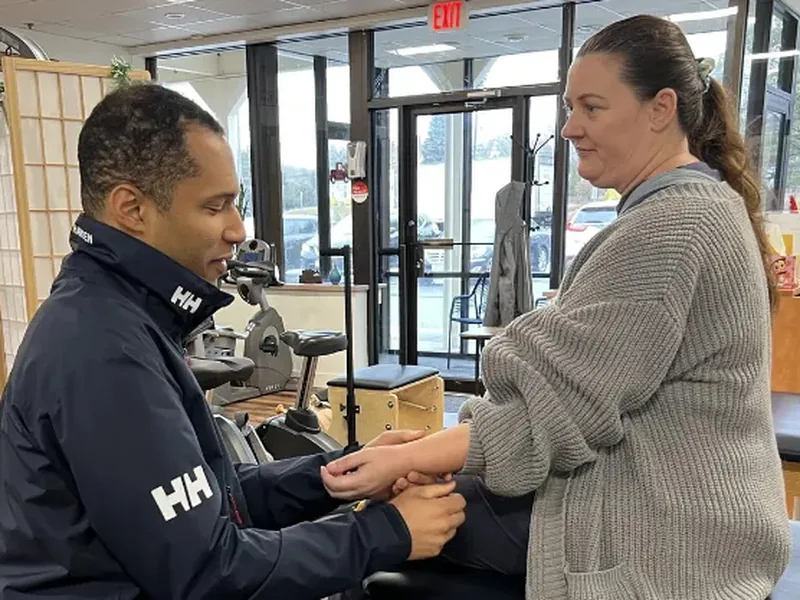
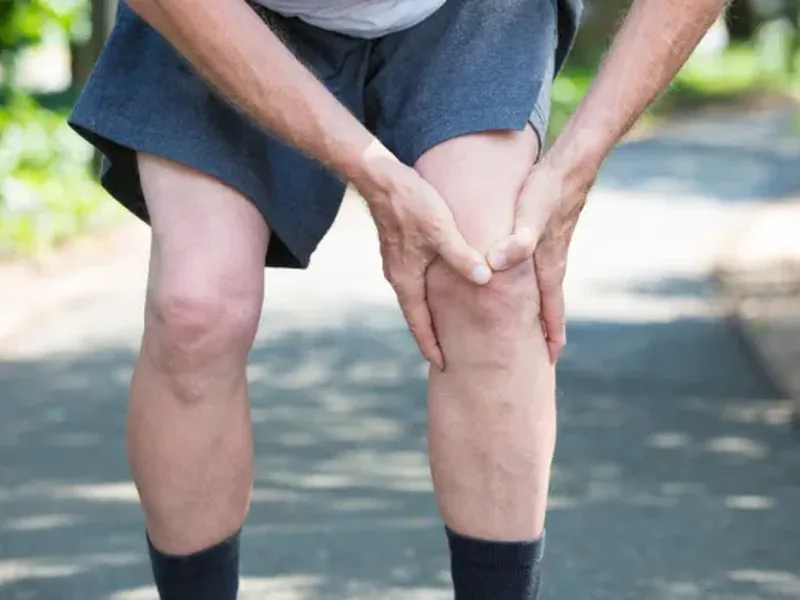
Sports physical therapy is not one-size-fits-all. We assess your injury, your sport, and your baseline movement and strength. We use hands-on techniques and targeted exercises to restore mobility and reduce pain. We rebuild strength and power specific to your sport. We identify movement errors or imbalances that led to the injury and fix them. We build a gradual return-to-sport plan that gets you back to training and competing without re-injury. The goal is not just recovery. It is coming back stronger, faster, and more resilient than you were before the injury.
You can start this week. Massachusetts has direct access to physical therapy, so you can book an evaluation without a physician referral, and because some insurance plans still require one for coverage, we verify your benefits before your first visit and tell you exactly where you stand. We accept Aetna, ASHLink, Blue Cross Blue Shield, Cigna, Fallon Health, Harvard Pilgrim, Mass General Brigham Health Plan, Medicare and Tricare, along with Workers' Compensation and auto injury claims, and flat self-pay rates are available if you are not covered. Sessions run 30 to 60 minutes, one on one with your doctor of physical therapy, not shared across a room full of patients.
We evaluate the injury, your movement patterns, your sport, and your baseline strength and power. We determine what caused the injury and what needs to be fixed to prevent re-injury. We set a realistic return-to-sport timeline. Most patients notice improvement within about six visits, and typical care runs two to three visits a week for four to six weeks, adjusted around your training and competition schedule.
We reduce pain and inflammation with hands-on work and targeted movement. We restore mobility and begin rebuilding strength. We progressively challenge the injured tissue so it heals stronger. Rest alone leaves tissue weaker than it was, which is why loading starts early and climbs on a schedule rather than waiting for pain to disappear on its own.
We build strength, power, and agility specific to your sport. We address the movement errors or imbalances that contributed to the injury. We progress you back to training and competition through a structured plan that builds confidence and resilience. You go home with the strength work that keeps the injury from repeating once the season starts again.
Maritime PT, specifically Jake Rowland, met all my therapeutic needs in a friendly but challenging atmosphere. The sessions were focused and were progressively more challenging as we went on.

ACL injuries are a common sports injury. Proper rehabilitation is essential for return to sport.

The hips and knees take the most stress in sports. Strength and stability prevent injury.

Ankle sprains are the most common sports injury. Full rehabilitation prevents re-injury.