What causes shoulder pain?
The shoulder is the most mobile joint in your body, which means it depends heavily on muscle strength and control to stay stable. When the rotator cuff muscles weaken, the surrounding muscles tighten, or your posture tips the joint out of alignment, pain follows. Understanding what has changed in your shoulder mechanics is the key to relief that lasts.
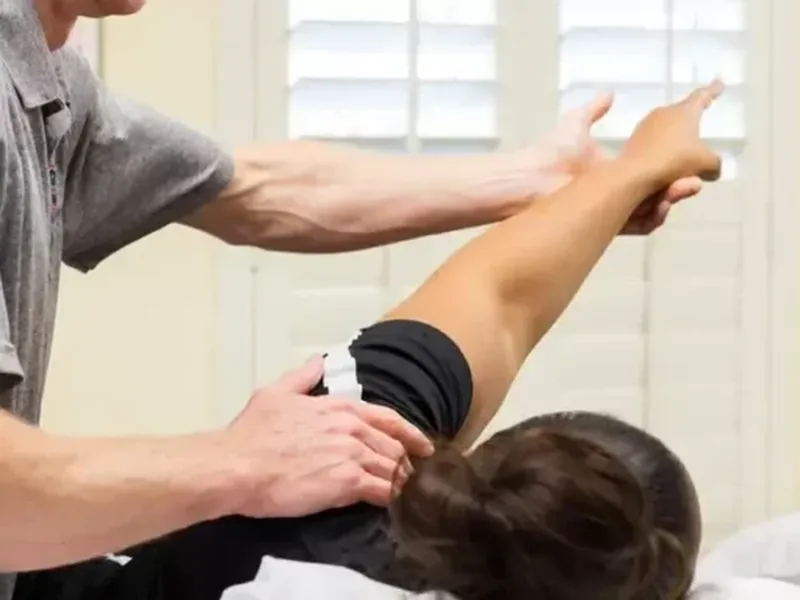
The rotator cuff is a group of four small muscles that stabilize your shoulder. They can be strained from overuse or torn from an injury or fall. Pain with overhead movement or lying on that side is the telltale sign. Some small tears heal well with the right movement and strengthening. Larger tears may need more intervention, but building strength around the injury helps either way.
Frozen shoulder is stiffness that comes on gradually and limits your range of motion. It often follows an injury or period of immobility. The connective tissue around the shoulder tightens down, making movement painful and restricted. Physical therapy breaks up that stiffness and restores movement through gentle stretching and mobilization. It moves through stages, and the pace matters more than force, so we work at the edge of your range without pushing you into a flare that costs you a week.
When the rotator cuff muscles are weak or fatigued, the head of the humerus shifts upward slightly, pinching the tendons and bursa underneath. This impingement causes sharp pain with overhead reaching. Most people notice it first when they reach into a cupboard, put on a seatbelt, or wash their hair. Rest quiets it for a few days, then it returns, because rest does not change the mechanics that caused the pinch. Opening up the space and strengthening the muscles that control the joint is what changes it.
The acromioclavicular joint sits at the top of your shoulder. Arthritis, sprains, or misalignment can cause pain, especially with overhead movement or across-the-body reaches. You can usually point to it with one finger, right on the bony bump where the collarbone meets the shoulder blade. Restoring how the shoulder blade glides underneath takes load off that small joint, and improving the mechanics of the shoulder often reduces AC joint pain without needing advanced treatment.
Spending hours at a desk with rounded shoulders or doing repetitive overhead work loads the rotator cuff without adequate recovery. The muscles fatigue and tighten. Over time they strain or tear. Painters, electricians, swimmers and anyone who works with their arms above their head see it most, and the fatigue builds so slowly that the first real sign is often pain at night. Improving your posture and how you load your shoulder protects the tissue and stops existing pain from getting worse.
Your shoulder stability depends on muscles working in coordination. If some muscles are weak and others are overactive, the joint becomes unstable and painful. The upper trapezius often takes over for a quiet rotator cuff, which is why your neck and your shoulder feel tight at the same time. Testing each muscle group separately shows us which ones have gone offline and which ones are working overtime. Rebalancing and strengthening these muscles restores stability and gets you back to pain-free movement.