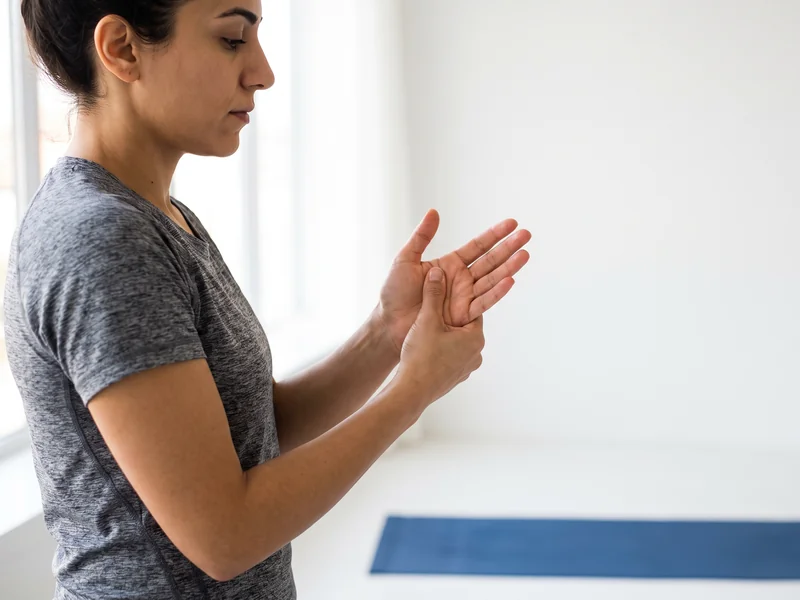
Buttons, jar lids, a pen, a coffee cup: when your hand stops cooperating, it is the small tasks that turn miserable. Hand therapy in Plymouth rebuilds motion, grip and confidence in the hand you use for everything.

Hand therapy is focused rehabilitation for the hand, wrist and fingers, the part of you that touches almost every task in a day and gets noticed the moment it stops working. A tendon that flares every time you grip. A finger that will not straighten after a cast comes off. Numbness that wakes you at two in the morning. A wrist that aches through an afternoon of typing. Your evaluation here starts with the tasks that have become difficult, then works backward to the tissue causing them. Your doctor of physical therapy checks joint motion finger by finger, tests how the tendons glide, screens the nerves that run from your neck through the elbow into the hand, and measures grip and pinch so progress becomes a number instead of a guess. Treatment blends skilled hands-on work to free stiff joints and scarred tissue with graded exercise that restores glide and rebuilds strength in the right order. Small joints are unforgiving, so dosing is the whole job. Push a healing tendon too hard and it swells. Do too little and it stiffens.
You do not need a physician referral to begin. Massachusetts has direct access to physical therapy, so you can book an evaluation with us directly. Some insurance plans still require a referral for coverage, so we verify your benefits before your first visit and tell you in writing exactly where you stand. We accept Aetna, ASHLink, Blue Cross Blue Shield, Cigna, Fallon Health, Harvard Pilgrim, Mass General Brigham Health Plan, Medicare and Tricare, along with Workers' Compensation and auto injury claims. Flat self-pay rates are available if you are not covered.
Hands rarely get the attention the rest of the body does. If gripping, pinching, twisting or simply closing a fist has become something you plan around, an evaluation is worth your time. These are the people we see most.
You lift a kettle, twist a lid or swing a hammer and a sharp line of pain runs through your thumb, wrist or forearm. Rest helps right up until the day you use it again. We calm the irritated tendon first, then load it gradually so it tolerates real work. Outcome: you grip, lift and carry through a full day without guarding the hand.
The bone healed and the cast came off, but the fingers will not close and the wrist will not turn the way it used to. Scar tissue and weeks of stillness did that, and both respond to skilled hands-on work paired with the right dose of motion. Outcome: you make a full fist, turn a key, and stop protecting the hand.
You wake with a dead hand, shake it out, and drop things you used to hold without thinking. Carpal tunnel and other nerve irritation respond best to a plan that addresses the wrist, the elbow and the neck together. Outcome: you sleep through the night and hold a glass, a phone or a steering wheel with confidence.
Sessions run 30 to 60 minutes, and you spend them one on one with your doctor of physical therapy rather than passed between aides. Here is how a visit runs.
We start with how the hand has behaved since your last visit: what swelled, what woke you, what you could finally do. Then we remeasure the things that matter, finger motion, wrist range, grip and pinch strength, so the day's plan is built on what actually changed rather than on the schedule we wrote two weeks ago.
Your therapist frees the joints and soft tissue that are limiting you. That usually means gentle mobilization at the wrist and finger joints, scar and soft tissue work where a fracture or an operation left restriction, and nerve glides when numbness is part of the picture. Every technique comes with a reason you can repeat back, because you will be doing a version of it at home.
You put in the reps that make the change stick, dosed to what the tissue can handle that day, then leave with a short home program you can run at a kitchen counter. Most patients notice improvement within about six visits, and a typical plan of care runs two to three visits a week for four to six weeks, reassessed as you go.
Tell us what your surgeon or hand specialist has advised, and bring any splint you have been given. If you are inside a post-operative protocol, we work within those restrictions and coordinate with the provider who set them. New numbness, spreading swelling, a wound that opens or drains, or a sudden loss of motion is worth a call to that provider rather than a wait until your next visit.
My therapist, Alanna, is very knowledgeable and has helped me in regaining full use of my arm. I’m very happy with my experience at Maritime Physical Therapy.

Skilled hands-on techniques that free stiff joints and restricted tissue so motion comes back.

Getting strong before an operation and rebuilding after it, inside your surgeon's protocol.

The upper limb problems we see most, and how we work out which one is driving your symptoms.