Some restriction sits too deep or too dense for a thumb to feel through. A bevelled instrument finds it, treats it, and gives the tissue a reason to remodel.

IASTM stands for instrument-assisted soft tissue mobilization. Your therapist uses a smooth, bevelled instrument, drawn across the skin over a thin layer of emollient, to work into muscle, tendon and fascia. The instrument does two jobs. First it detects. A rigid edge transmits the texture of the tissue underneath straight into your therapist's hand, so dense, fibrous or adhered areas announce themselves in a way a thumb pressing through soft tissue often cannot register. Second it treats. A controlled, focused stroke concentrates force into a smaller area than a hand can, which is what makes it useful over dense tendon, over old scar, and over restriction that has been there long enough to organise itself. The point is never to grind through tissue. It is to introduce a controlled mechanical stimulus into a spot that has stopped responding, and then to give the body a reason to remodel it.
IASTM is a tool, not a treatment plan, and it gets chosen when a hand cannot reach what needs treating. Plenty of restriction responds perfectly well to hands alone, and your therapist will tell you honestly which one you are. Massachusetts direct access means you can start without a physician referral. Some plans still require one for coverage, so we verify your benefits before your first visit and tell you exactly where you stand.
IASTM earns its place where tissue is dense, scarred, or long-standing, the places where hand pressure spreads out before it reaches the problem. If your restriction is months or years old and superficial work has not touched it, this is the tool for it.
The outside of the elbow or the front of the knee has ached for months. It is no longer an acute injury. It is dense, thickened tissue that has stopped remodelling on its own. Focused instrument work delivers a stimulus the tissue can respond to, and paired with loading exercise it is often what moves a stalled tendon forward again.
Months after a surgery or a bad laceration the scar is still firm, and the tissue around it does not move with the rest of you. Once healing is complete and your surgeon has cleared you, an instrument can work directly over and around the scar to help it reorganise, and the tethered feeling starts to fade.
The outside of the thigh, the sole of the foot, or the back of the calf tightens again within days no matter what you do. The instrument locates the exact dense strip instead of treating the whole region, so the work lands where it is needed and the exercise that follows has a clear target.
The instrument is a short part of a longer session, not the whole of it. Here is how the visit runs from the moment you walk in.
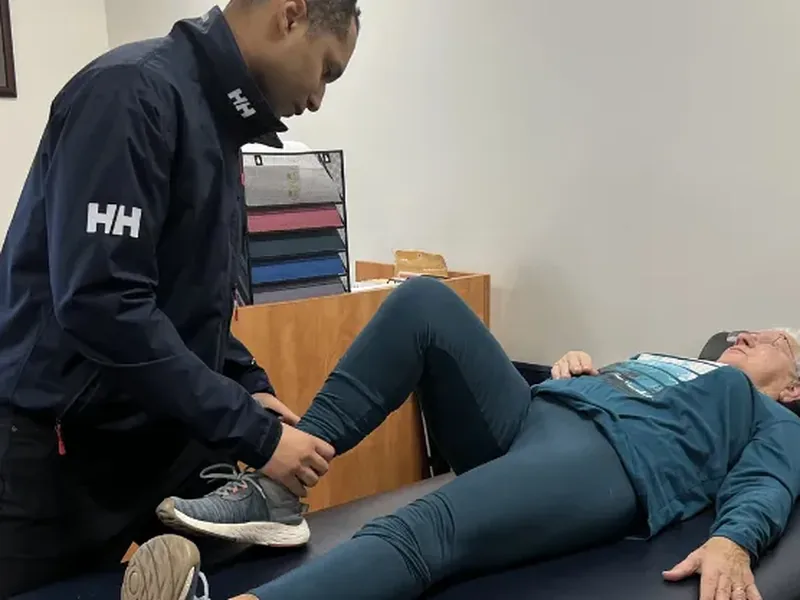
Your first visit is a 30 to 60 minute hands-on evaluation, one on one with a Doctor of Physical Therapy. Your therapist watches you move, then screens the region by hand before any instrument comes out, because the tool is only worth using once the target is clear. Your skin gets checked too, since IASTM is applied over intact skin only.
A thin emollient goes on and your therapist draws the instrument across the region at a set angle and pressure, usually for a few minutes per area rather than for the whole session. Where the tissue is dense you will feel a grittiness under the edge. Pressure should sit at a firm, tolerable ache. Redness in the treated area is expected, and it is where your therapist stops rather than something to push past.
Instrument work opens a window and exercise decides what the tissue does with it, so you finish the session loading the area and leave with a short home program. Most patients notice improvement within about six visits, and typical care runs two to three visits a week for four to six weeks. We accept nine major carriers including Aetna, Blue Cross Blue Shield and Medicare, plus Workers' Compensation and auto injury claims, with self-pay rates available.
Expect redness, warmth, and sometimes small pinpoint spots called petechiae in the treated area. That is a normal response and usually settles within a day or two, though light bruising can happen. IASTM is not appropriate over broken or infected skin, an open wound, a fresh unhealed incision, a known blood clot, or an area of active cancer, and it is not used if you take a blood thinner, bruise easily, or have a bleeding disorder. Sharp pain, numbness or tingling means tell your therapist to stop, and they will.
Great place. Modern equipment, strategies. Personable and professional team.

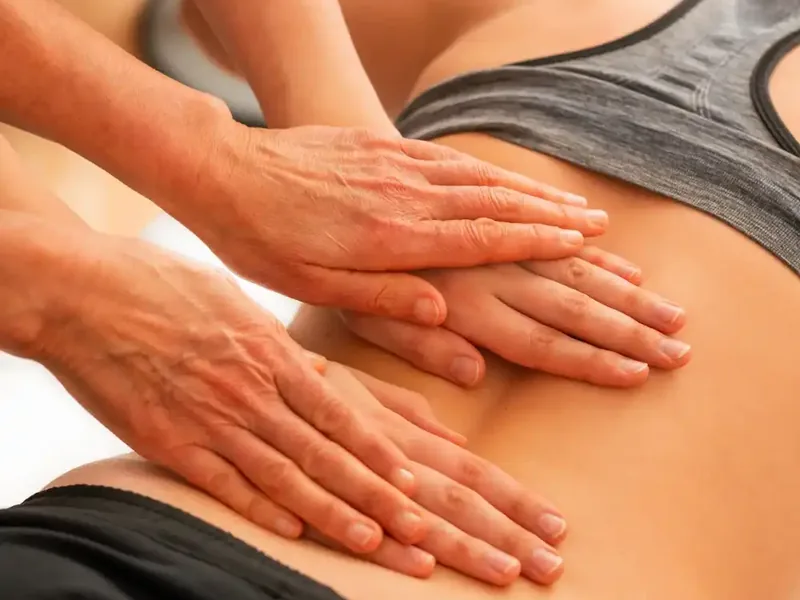
The hands-on toolkit the instrument sits inside, from joint mobilization to soft tissue work.

Where the loading that has to follow instrument work is built into a return to sport plan.

The most common reason people find us, and a frequent site of dense, long-standing tissue restriction.