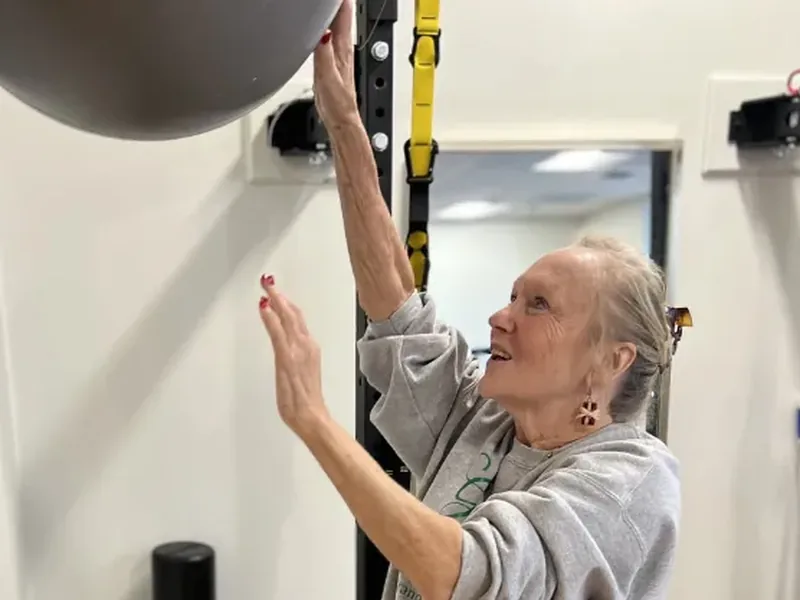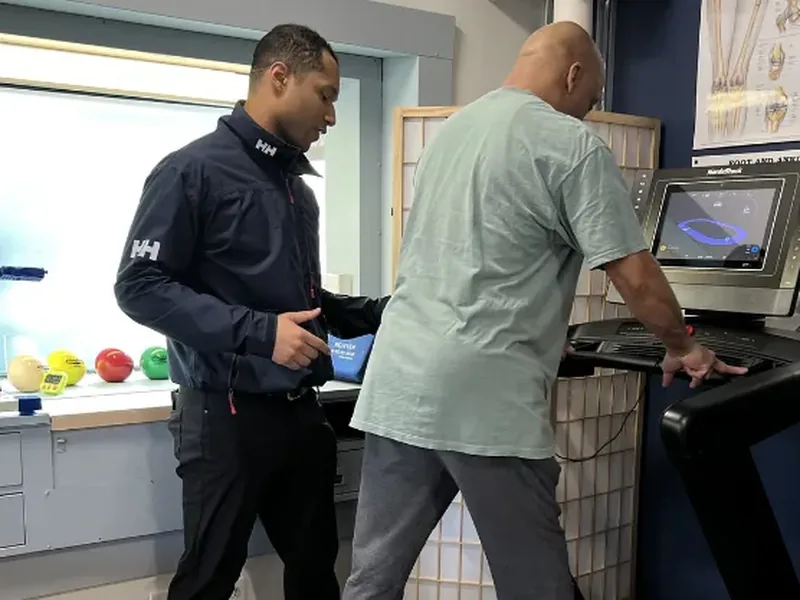
You have done the stretches, and the relief still expires by midweek. Therapeutic exercise is the prescribed loading that turns a good day into a lasting change, dosed to your body and progressed every week.

Therapeutic exercise is prescribed loading. Not a sheet of movements handed to you at the door, but specific exercises, at a specific dose, in a specific order, chosen because your evaluation showed which tissue is underloaded and which pattern is doing too much of the work. Load is the signal that tells muscle, tendon and bone to adapt. Too little and nothing changes. Too much and you flare. The skill is finding that line for your body, then moving it a little further every week. Your Doctor of Physical Therapy sets the sets, the reps, the tempo and the resistance, watches how you actually perform them, and adjusts before the next visit rather than after the next flare. It is the reason the same squat can be rehabilitation for one person and a setback for another. Hands-on care can quiet an angry joint or muscle inside a single visit, and that matters. Loading is what makes the quiet hold, because it changes the tissue itself instead of the signal coming from it.
Which is why your home program is not homework. It is the treatment. You are in this building two or three times a week. The rest of the week is where the tissue actually adapts, so what you walk out with matters as much as what happened on the table. You get a short list, not a stack: the two or three movements earning their place right now, with the dose written down. And you do not need a physician referral to start. Massachusetts has direct access to physical therapy. Some plans still require a referral for coverage, so we verify your benefits before your first visit and tell you exactly where you stand.
Mostly for people whose relief keeps expiring. If treatment feels good in the room and fades by Thursday, the missing ingredient is usually load, not more rest. These are the situations it changes most.
The shoulder settles on the table and by Thursday it is back where it started. That pattern almost always means the tissue is getting calmed but never asked to do more. We find the movement your body has been quietly avoiding, load it at a dose you can tolerate, and add to it each week. The result is good days that start outnumbering the bad ones instead of trading places with them.
You were told you are fine, and you still do not trust the knee on a ladder or the back lifting a grandchild. Pain free at rest is not the same as ready under load, and nobody tested the difference. We rebuild capacity in the exact positions your job and your sport demand, then load them in front of you before you go back to them. You return knowing what the joint can take.
Arthritis, a tendon problem, a disc issue, and a photocopied page of generic exercises. Nothing on that page knows your range, your strength, or what flared you last month. We reassess as you go and change the dose to match how you are genuinely responding, not how the sheet assumed you would. You end up with a program that has your name on it and keeps working after discharge.
Every visit is one on one with the same doctor of physical therapy, in a room where the exercise is coached rather than handed out. Here is how a session runs.
Sessions run 30 to 60 minutes, one on one with your doctor of physical therapy, and the first minutes belong to the last few days. What flared, what felt easy, how the home program actually went. Your therapist retests the one or two measures that matter for your case, a range, a strength test, a single loaded movement, and that number sets the dose for today rather than a plan written three weeks ago.
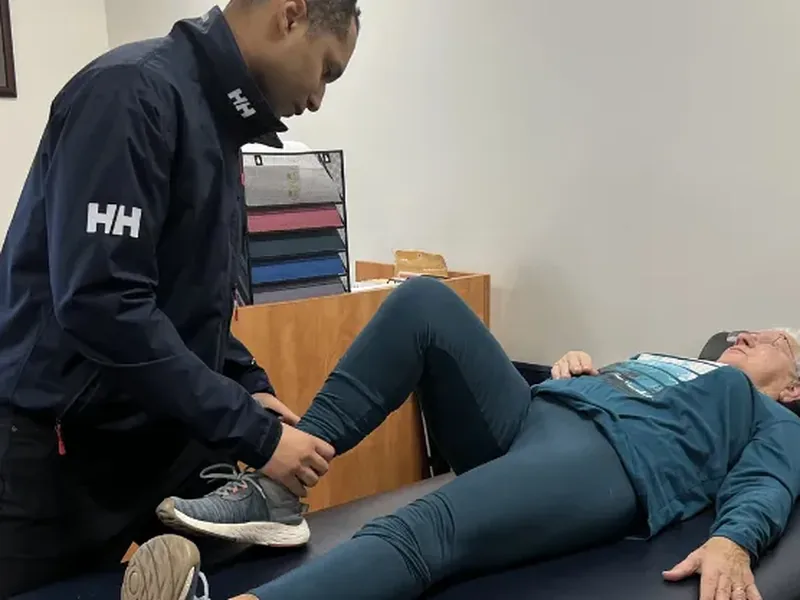
Then you work. Your therapist watches the reps, because a movement performed with the wrong joint doing the effort is not the movement that was prescribed. Cues, tempo changes and small adjustments to depth or resistance happen while you are still under load, not in a note afterward. Hands-on work gets used here too, when a stiff joint or a guarded muscle has to be quieted before the exercise can be done properly.
You leave with the two or three exercises earning their place this week, with sets, reps, and a plain description of how they should feel. Most patients notice improvement within about six visits, and a typical plan runs 2 to 3 visits a week for 4 to 6 weeks. As you get stronger the list changes, and the final version of it is the one you keep for good.
We accept Aetna, ASHLink, Blue Cross Blue Shield, Cigna, Fallon Health, Harvard Pilgrim, Mass General Brigham Health Plan, Medicare and Tricare, along with Workers' Compensation and auto injury claims. We check your insurance benefits before your first visit and give you your copay and visit limits in writing. Flat self-pay rates are available if you are not covered. Wear clothes you can move and load in.
Great place. Modern equipment, strategies. Personable and professional team.

Hands-on work that quiets a stiff joint or guarded muscle so the loading can be done properly.

The same loading principles, aimed at your sport, your position, and the date you want back.

Where graded, progressive loading does some of its most reliable work. See how we treat it.