(508) 682-4217 · 715 State Rd, Plymouth, MA 02360
Maritime Physical Therapy

Yoga Therapy in Plymouth

You have been told to try yoga, and the one class you went to left you sore for two days. This is the clinical version: one on one, scaled to the range your body actually owns today, and adjusted the moment a position starts feeding your symptoms.

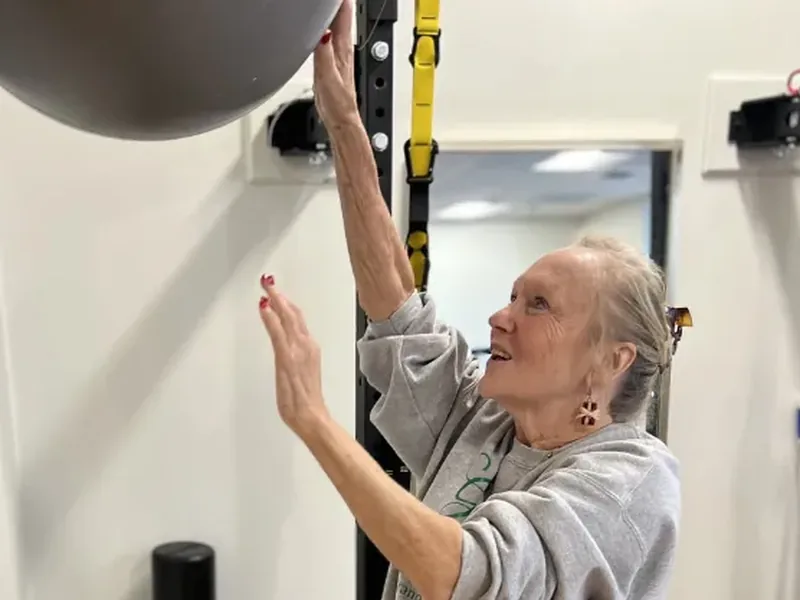
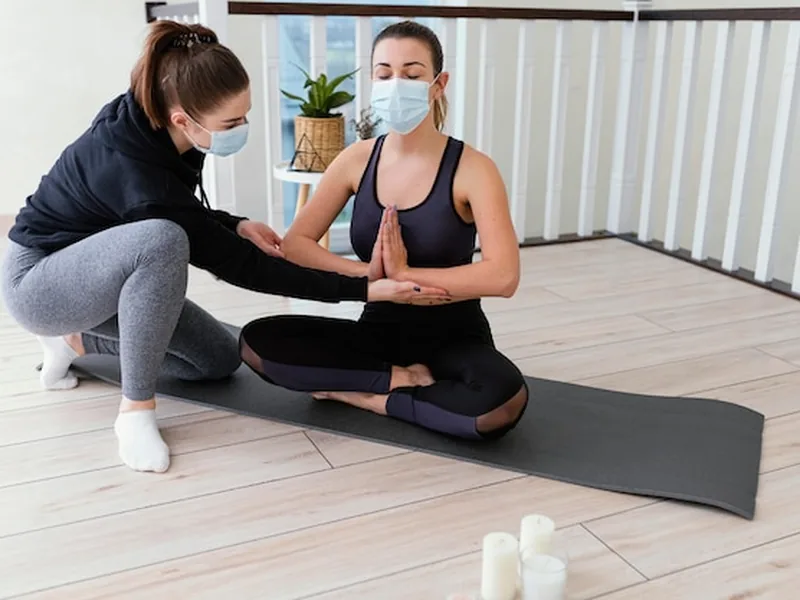
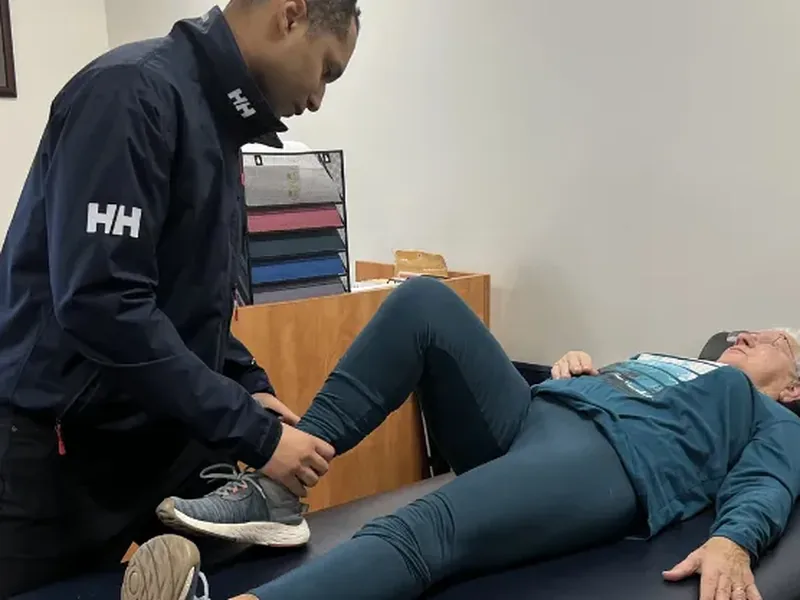
Doctor of Physical Therapy working one on one with a patient
01What It Is

What is yoga therapy?

Yoga therapy is not a class held in a treatment room. It is one on one clinical work in which a Doctor of Physical Therapy takes the positions, the holds, and the breathing of yoga and prescribes them the way any other exercise gets prescribed, from what your evaluation actually showed. Nobody is at the front of a room counting breaths for twenty people. Your therapist watches your hips, your ribs, and your breathing in every position and changes the shape the moment it starts feeding a symptom instead of easing it. Range of motion comes back because tissue is loaded gently and repeatedly, not because you forced an end range you were not ready for. The breathing is treatment, not a warm up. Slower, fuller breathing lowers the guarding in the muscles around a painful joint, and that guarding is often what has been blocking the motion in the first place. Sessions run 30 to 60 minutes, one on one with your therapist, start to finish.

The difference is prescription. A class gives everyone the same sequence and hopes it fits. Here the sequence is written for the shoulder that will not go overhead or the hip that grabs at the bottom of a squat, and it gets rewritten as those things change. Maritime Physical Therapy is a small Manomet clinic where all four treating clinicians hold a Doctor of Physical Therapy degree, so the person choosing your positions is the same person who assessed you.

02Who It's For

Who is yoga therapy in Plymouth for?

Yoga therapy suits people whose bodies have started saying no to hard, fast exercise but who still need to move. If stiffness, guarding, or the fear of flaring something up is shaping your week, this is a way back in.

01

Stiffness that a studio class makes worse

You went to one class, spent the next two days paying for it, and quietly stopped going. Every position here is scaled to the range you own today, then added to week by week. You get the mobility work without the flare that made you quit the first time.

02

Chronic pain that reacts to everything

Some weeks a walk is fine and other weeks it is not, and you have stopped trusting your own signals. Breath-led movement at low load gives your system something predictable to work with. You end up with a form of exercise you can still do on a bad day, which is the day it matters.

03

Range you never got back after an injury

The sharp pain settled months ago, but you never fully returned to reaching, kneeling, or twisting, and you have built your day around avoiding them. Held positions and controlled breathing take back what the guarding took. The end range returns, so those movements stop being a decision.

03What To Expect

What happens in a session?

Every visit is one on one, in a treatment room, with your own therapist. Here is how a yoga therapy appointment runs at our Manomet clinic.

01

Evaluation before any position

Your first visit is a full hands-on evaluation, before a single posture gets chosen. Your therapist measures your range, tests strength side to side, and watches what your breathing does when a joint is loaded. Massachusetts has direct access to physical therapy, so you can book that evaluation without a physician referral. Some insurance plans still require one for coverage, so we verify your benefits first and tell you exactly where you stand.

02

Breath first, then movement

Sessions run 30 to 60 minutes, one on one with your doctor of physical therapy. We open with breathing to bring the guarding down, then move into the positions your evaluation pointed to, held long enough for tissue to actually respond rather than just be visited. Your therapist stays with you through every hold, changes the shape the moment a symptom appears, and stops a position before it becomes something you pay for tomorrow.

03

Progression and your home sequence

Most patients notice improvement within about six visits, and typical care runs 2 to 3 visits a week for 4 to 6 weeks, reassessed as you go. You leave with a short home sequence you can actually remember, not a stack of printouts. We accept nine major insurance carriers along with Workers' Compensation and auto injury claims, check your benefits before your first visit, and give you your copay in writing. Flat self-pay rates are available if you are not covered.

Good to know

No prior yoga experience is needed and no position is required. Wear clothes you can move in, and tell your therapist about pregnancy, recent surgery, dizziness, or any movement a physician has restricted. If a shape does not suit your body, we use a different one that loads the same tissue.

In Their Words
Very professional and effective. Would definitely recommend!
Joleen C. · Google review
Explore More

Where to go next.

Request an Appointment

Ready when you are.

HoursMon-Thu: 7:20am - 6:00pm | Fri: 7:20am - 1:00pm
Walk-insCall ahead
Book your evaluation. No referral needed in Massachusetts.
Step 1 of 5
First things first. What's your name?
We'll need a name to book you in.
Best number to reach you?
A phone number lets us confirm same-day.
And your email?
We'll send your confirmation here.
What questions do you have about your pain or injury?
A few words is all we need.
Look right? Send it.
✓
Request received.

We'll call within business hours to lock in your time.

Book Now · Schedule Appointment