The first step out of bed is the one that takes your breath, and by the end of a long day the heel is complaining all over again. Heel pain like that is a load problem, and load problems have a plan.
The plantar fascia is a thick band that spans the bottom of your foot and helps it work like a spring. It gets irritated when the demand placed on it outruns what it can currently tolerate. That is why the story is almost never the heel alone. It is the calf, the foot, the shoes, and whatever you added to your week a month ago.
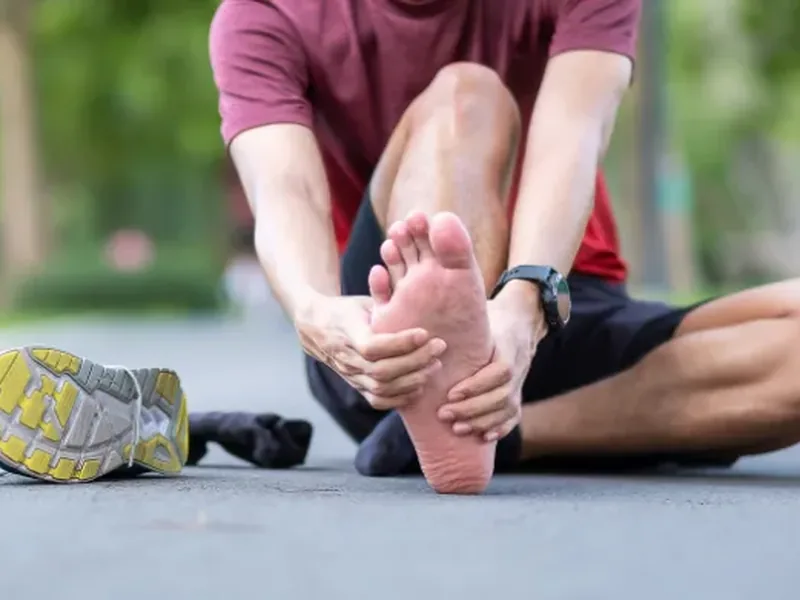
Fascia adapts, but slowly, and it does not like surprises. A training block that adds distance too fast, a new job on a concrete floor, a spring of yard work, a summer of long walks on soft sand: each one raises demand quicker than the tissue can build tolerance. This is the most common story we hear. It also explains why rest alone rarely settles it, because rest lowers tolerance further while your week goes right back to what it was.
Every step asks your ankle to bend forward as your body passes over the foot. When the calf is tight or the ankle joint is stiff, that motion has to come from somewhere, and the arch pays for it by stretching further and for longer than it should. Calf strength matters as much as calf length, because a strong calf absorbs load the fascia would otherwise take. It is why heel pain plans built only on stretching tend to stall.
Feet come in different shapes and none of those shapes is a diagnosis. What matters is control: whether the small muscles of the foot and the bigger muscles at the hip can hold the arch through a step instead of letting it collapse and snap back. A foot that flattens fast and a foot that stays rigid both send more strain through the fascia, just in different spots. We test yours rather than guess from a footprint.
Shoes wear out from the inside, so a pair that felt fine in March can be doing very little by October. Switching suddenly from supportive work boots to flat sandals changes the demand on the fascia overnight, and so does a winter of slippers on hardwood. We are not here to sell you an insert. We look at what you actually wear for work, for walking and for training, and change what is adding load while the tissue is sensitive.
Plenty of people are told they have a heel spur and assume the spur is the problem. Spurs are common findings. They show up in feet that hurt and in feet that never have, and taking one out is rarely the conversation. Pain tracks with what the fascia and the calf can tolerate far more closely than with what an image shows. That is good news, because tolerance is the part we can change.
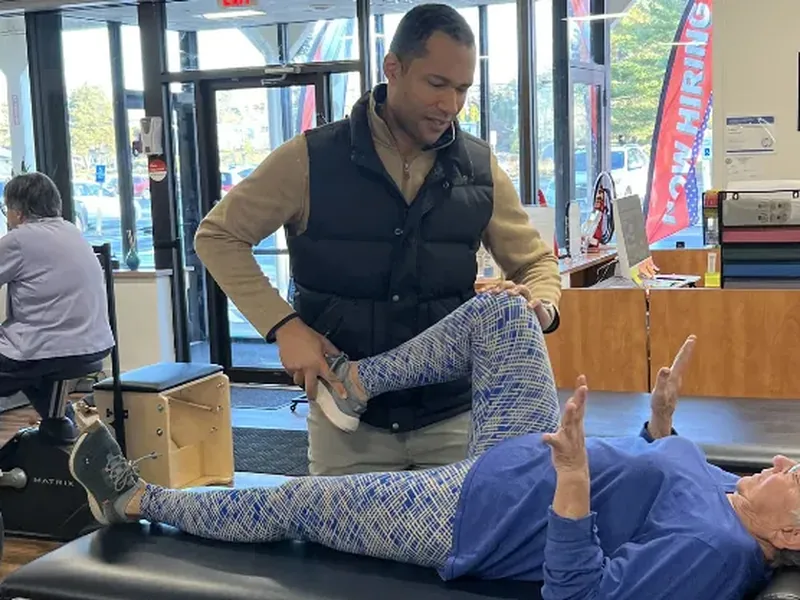

Plantar fasciitis is not something you have to wait out. It is a tissue tolerance problem, which means it answers to the right load rather than to rest and hope. You can book an evaluation without a physician referral, because Massachusetts has direct access to physical therapy, and since some plans still require a referral for coverage, we verify your benefits before your first visit. In the clinic the work is hands-on: soft tissue treatment for the calf and arch, mobilization for a stiff ankle, dry needling when the calf is guarding, and instrument assisted work along the fascia itself. Then we build. Calf and foot strength loaded slowly and deliberately, plus a walking and training plan that fits your actual week. The goal is a foot that tolerates your life, not one that only feels good on the treatment table.
Your first visit runs 30 to 60 minutes, one on one with a doctor of physical therapy. We watch you walk, test calf strength and ankle motion, press to find exactly which tissue is irritated, look at the shoes you actually wear, and ask what changed in the weeks before this started. You leave knowing what we found and what the plan is, in plain language.
Early work calms the tissue while keeping you moving. Hands-on care for the calf and arch, instrument assisted work along the fascia, taping or a short term change to your footwear, and specific loading you can do at home. Cost gets handled first: we accept nine major carriers, along with Workers' Compensation and auto injury claims, we verify your benefits and give you your copay in writing, and flat self-pay rates are available.
Then we build the tolerance that keeps it gone. Progressive calf and foot strengthening, then a graded return to your walks, your runs, and the hours you spend standing at work. Most patients notice improvement within about six visits, and a typical plan runs two to three visits a week for four to six weeks, adjusted at each reassessment rather than fixed in advance.
I am very happy with my progress. Jake has been Fantastic!

Not all heel pain is fasciitis. Tendon, joint and nerve problems each need a different plan.

A sore foot changes how you walk, and the hip and knee absorb the difference. We treat the whole chain.

Returning to running takes a graded plan. We rebuild mileage on tissue that can hold it.