(508) 682-4217 · 715 State Rd, Plymouth, MA 02360
Maritime Physical Therapy

Joint Replacement Therapy in Plymouth

The new joint is in. Nobody warned you that the hard part starts now. Structured rehab is what turns a successful operation into a hip or knee you actually trust on stairs.

Doctor of Physical Therapy working one on one with a patient
01What It Is

What is joint replacement therapy?

It is the structured recovery that follows a hip or knee replacement, and it has a specific job list. First, motion. A replaced knee that does not get its bend and its full straightening back in the early weeks tends to keep whatever it settles at, so range work starts early and it is not optional. Second, strength, and specifically the quadriceps and the glutes. Both switch off after surgery, and the weakness is usually out of all proportion to how the joint itself feels. Third, gait. Most people arrive having limped for years before the operation, and that limp does not disappear because the joint was changed. It has to be retrained, step by step, until walking looks and feels even again. Fourth, stairs, curbs, cars and the floor, because those are the moments that decide whether you feel independent. And fifth, confidence, which is not a soft goal. Trusting the leg is what stops the guarding that keeps everything else stiff.

Massachusetts has direct access to physical therapy, so you can book an evaluation without a physician referral. In practice most joint replacement patients come with one, and coverage for post-surgical care sometimes requires it, so we verify your insurance benefits before your first visit and tell you exactly where you stand before you spend a dollar.

02Who It's For

Who is joint replacement therapy in Plymouth for?

People with a new hip or knee, at any point in the first year. Also the people still deciding, who want to be as strong as possible going in.

01

Fresh out of surgery and stiff

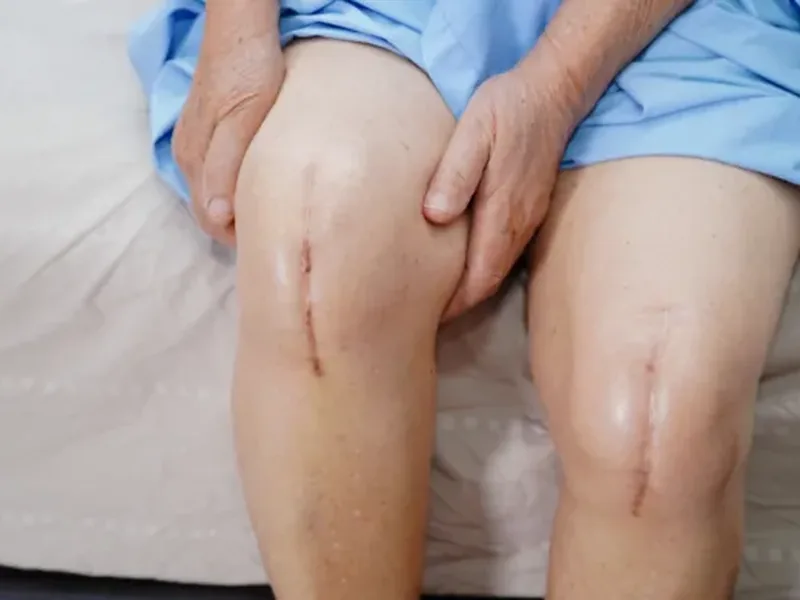
You are two or three weeks post-op, the knee will not straighten fully, and bending it feels like it belongs to someone else. This is the window that matters most for range, and it does close. We work the motion by hand and by exercise inside your surgeon's limits, manage the swelling that is holding it hostage, and get the numbers moving while they still move easily.

02

Walking again, but still limping

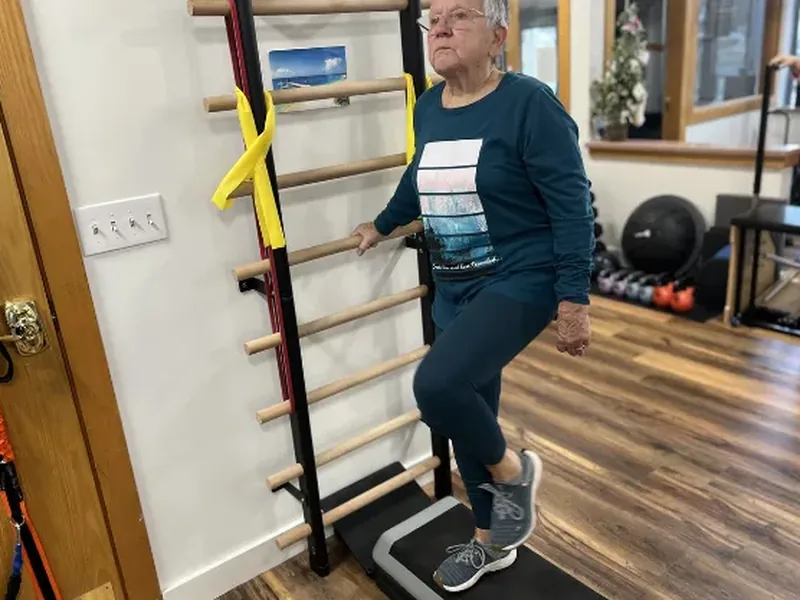
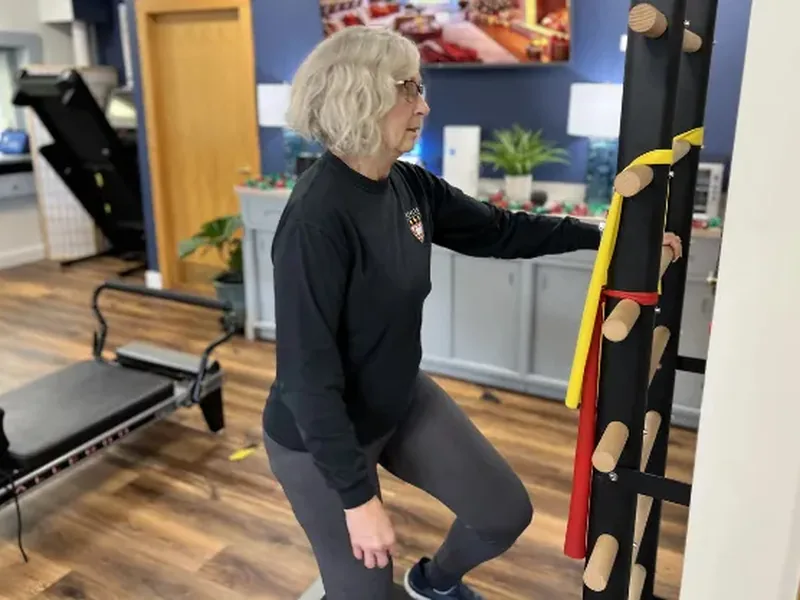
You are off the walker and the leg holds you up, yet everyone can tell which side was replaced. That is the quad and the glute, not the implant. We load them directly, then rebuild the walking pattern itself: step length, timing, weight through the new side, and stairs one foot over the other instead of the careful shuffle. The limp is trainable, and it is worth training.

03

Replacement scheduled, not done yet

You have a date and the joint is bad enough that you have been avoiding stairs for a year. Every week of that avoidance costs you quad strength you will want back afterward. We build what we safely can before the operation and teach you the post-op exercises now, so the first week home is a routine you already know instead of a page you are trying to decipher.

03What To Expect

What to expect in a session.

Same therapist every visit, so nobody has to be told twice which knee it was or how last week went. Here is the shape of a session.

01

Measure the joint, every time

Sessions run 30 to 60 minutes, one on one with your doctor of physical therapy, and each one opens with numbers. Degrees of bend, degrees of straightening, how the swelling compares to last visit, and how far you walked before the leg complained. Range after a replacement moves week to week, so we track it week to week rather than trusting how it felt on the drive over.

02

Motion by hand, then strength on purpose

Your therapist works the joint and the surrounding tissue by hand to give you range you cannot yet produce yourself, and treats the scar and swelling that are limiting it. Then the strength work begins, aimed squarely at the quadriceps and the glutes, because those two decide whether you climb a stair or haul yourself up it. Every progression stays inside your surgeon's stated precautions.

03

Walking, stairs, and the home program

The last stretch of each visit is spent on the movements you actually need: standing from a low chair, getting into a car, one foot over the other on the stairs, and walking without the limp you brought in. You leave with a short home program. Most patients notice improvement within about six visits, and typical care runs 2 to 3 visits a week for 4 to 6 weeks.

Your surgeon's protocol comes first

Every joint replacement carries precautions, and they differ by surgeon and by surgical approach. Bring your operative report, your written protocol and any restrictions you were given, including weight bearing status, range of motion limits and posterior hip precautions where they apply. We treat inside those limits and we do not advance a stage ahead of them. Where a protocol is missing or unclear, we contact your referring physician's office to confirm before the next visit. Call your surgeon straight away for calf pain or swelling, redness or heat at the incision, fever, drainage, or a sudden loss of motion you had already gained.

In Their Words
I highly recommend working with Jake at Maritime PT. He is very knowledgeable and in just a couple of sessions I am seeing improvement.
Marybeth W. · Google review
Explore More

Where to go next.

Request an Appointment

Ready when you are.

HoursMon-Thu: 7:20am - 6:00pm | Fri: 7:20am - 1:00pm
Walk-insCall ahead
Book your evaluation. No referral needed in Massachusetts.
Step 1 of 5
First things first. What's your name?
We'll need a name to book you in.
Best number to reach you?
A phone number lets us confirm same-day.
And your email?
We'll send your confirmation here.
What questions do you have about your pain or injury?
A few words is all we need.
Look right? Send it.
✓
Request received.

We'll call within business hours to lock in your time.

Book Now · Schedule Appointment