The arthritic hip is gone, and the deep grinding pain went with it. What is left is a leg that has not carried its share in a long time, and a walk that still remembers the limp.
A new hip solves the joint. It does not solve years of limping, a glute that stopped pulling its weight, or the way your body learned to protect that side. That part belongs to rehab, and it starts with knowing exactly what is holding you back.

Hip precautions depend on how the surgery was done and on your surgeon's judgement, not on one rule that fits everybody. Some approaches carry restrictions for a period on deep bending, crossing the legs, or turning the leg inward. Others carry very few. We do not guess at yours. We read your protocol, ask your surgical team when something is unclear, and show you how to get into a car, put on a sock and sleep comfortably inside the limits you were given.
Long before surgery, an arthritic hip changes how you move. The gluteus medius, the muscle that keeps your pelvis level when you stand on one leg, goes quiet, and your body finds other ways to stay upright. Replacing the joint does nothing for that muscle. Without deliberate strengthening you end up with a hip that no longer hurts attached to a leg that still cannot hold you steady, and that is exactly how a limp survives an operation.
You limped for a reason, and your nervous system learned it thoroughly. After surgery the reason is gone but the pattern stays: a short step on one side, a hip that swings out to clear the ground, weight that never fully settles onto the new joint. It does not correct itself simply because walking stopped hurting. It gets corrected by practising, with feedback and with the strength to back it, until an even step feels normal again.
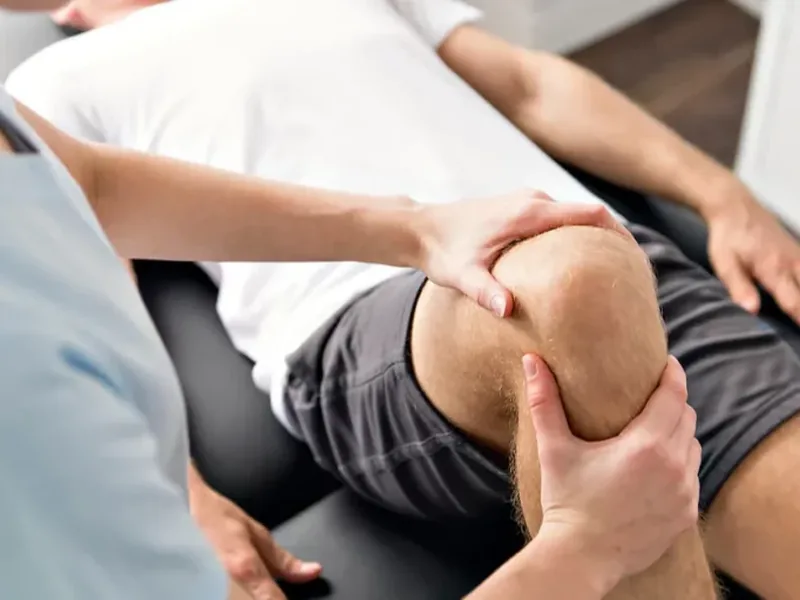
The tissue around the hip has been through a great deal, and it answers with swelling and guarding. That shows up as a hip that resists rotation, an ache at the end of a long day, and a scar that tugs when you reach forward. Gentle hands-on work, good positioning and steady tolerable motion do more here than pushing hard. Range comes back as the muscles work out that they are allowed to relax again.
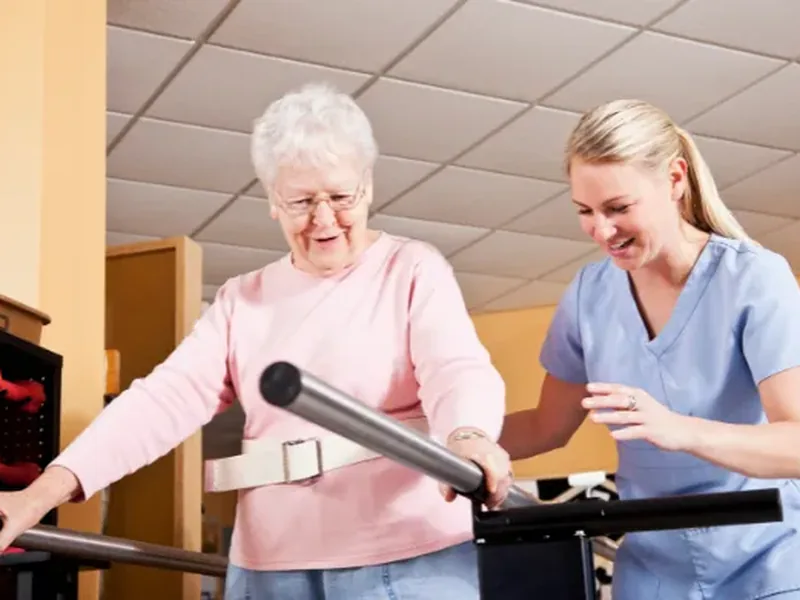
Steps ask more of a new hip than flat ground does, and most people can feel it. Add a handrail on the wrong side, a curb in a parking lot, or an icy walkway in February and confidence shrinks fast. That caution is not irrational, it is information. We train stairs, single leg control and balance on purpose, and we keep your cane or walker in play until your strength genuinely says you can set it down.
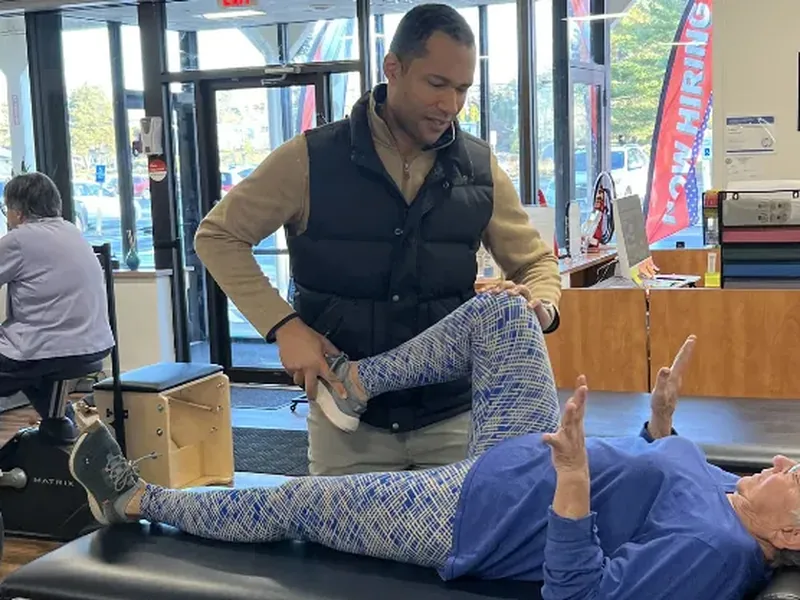
After a total hip the plan is honest and it is ordered: restore the motion your hip is cleared to have, rebuild the strength that went missing long before the operation, then retrain walking and stairs until they stop taking concentration. Timelines and precautions come from your surgeon, and we work inside them rather than inventing our own. What we add is hands-on care for the joint and the tissue around it, strengthening for the glutes, quads and trunk, and gait work with real feedback, in a clinic where every session is one on one with a doctor of physical therapy. Booking is simple: Massachusetts has direct access, so no physician referral is needed to start, and because some plans still require one for coverage, we verify your benefits before your first visit and tell you exactly where you stand.
Your first visit runs 30 to 60 minutes, one on one with a doctor of physical therapy. We go through your surgeon's protocol and any precautions, measure the strength and range you are cleared to test, watch you walk with and without your aid, and see how you handle a step. You leave knowing what we found, what is safe right now, and what comes first.
Then we rebuild the hip that has been coasting for years. Glute medius and glute max, quads, and trunk control, progressed as you tolerate rather than on a calendar. Cost is settled before we start: we accept nine major carriers, along with Workers' Compensation and auto injury claims, we verify your benefits and put your copay in writing, and flat self-pay rates exist if you are not covered.
Last comes the part you came for. Even steps, weight settling onto the new hip, stairs under control, and the cane set down when your strength says so rather than when the calendar does. Most patients notice improvement within about six visits, and a typical plan runs two to three visits a week for four to six weeks, adjusted at every reassessment.
I highly recommend working with Jake at Maritime PT. He is very knowledgeable and in just a couple of sessions I am seeing improvement.

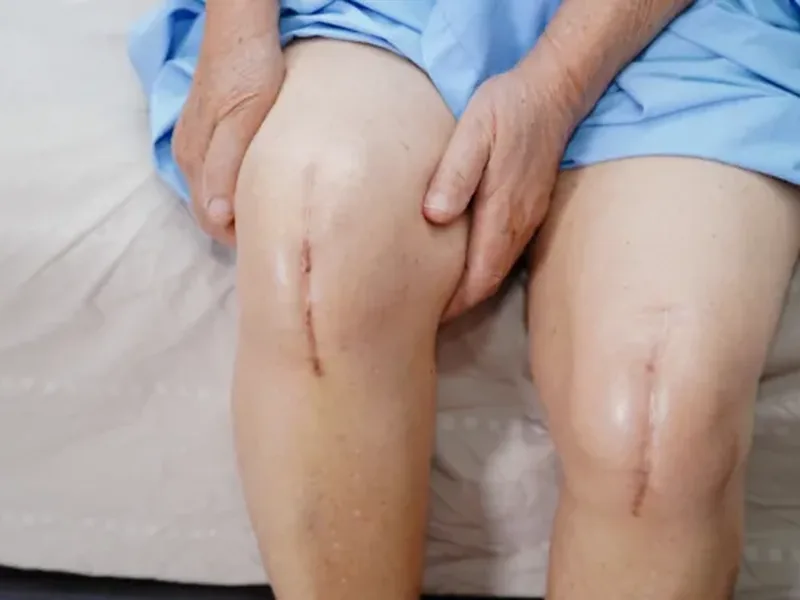
The same order of operations on the other big joint. Motion, then strength, then stairs.

Steadiness and an even walk get trained directly, with feedback, not left to time alone.

The other hip or the knees often complain while one side recovers. We treat the whole leg.